Thursday, August 23, 2012

University of Maryland Annual Fall Events

It is back to school time, and everyone is ready to get back on campus.  Do you know what events University of Maryland is having this year?  We have a list below of many of the main fall events including the annual All-Niter!

New Student Welcome
Days before classes begin, Fall Semester

Part of New Resident Orientation, this is Maryland's version of a new student convocation. Over 4,000 new students gather in Comcast Center and are officially welcomed to the University. This event features short speeches by President Loh, the SGA President, a representative from the Alumni Association, and an athletic coach, as well as being introduced to the victory song with the Mighty Sound of Maryland Marching Band.

All Niter

Last Friday of September

Stamp's biggest party! Activities start in the afternoon and continue until almost 4am! Previous activities have included Bingo, caricature and airbrush artists, movies in the Hoff, fashion shows, carnival games, aerial artists, and dance party. Student organizations and departments are encouraged to register and sponsor various events and performances throughout the night. thestamp.umd.edu/allniter.

Homecoming

usually mid-October

The Homecoming Celebration at the University of Maryland is a week-long schedule of events that culminates in the Homecoming Parade on Friday and the Homecoming Football Game on Saturday. Homecoming Week Events are conceptualized and planned primarily by the Student Homecoming Committee. homecoming.umd.edu.


Ongoing Events and Programs

Stamp Friday Showcase
Every Friday during the academic year, from 12pm-1pm, in the Baltimore Room or Nyumburu Amphitheater (in good weather)

A weekly talent showcase featuring performers and bands from the University of Maryland community. Held outside when the weather is nice in early fall in Nyumburu Amphiteather, however, as the weather becomes colder or in the case of inclement weather, the showcase is moved indoors into the Baltimore Room. For more information, or to inquire about performing, visit Stamp Friday Showcase.

Stamp Second Saturdays

Second Saturday of each month, after 7 pm, in the Stamp

A brand new initiative to the Stamp, this is a monthly series of FREE late night weekend events for students. Under the umbrella of Stamp Second Saturdays, each month, a different unit within Stamp will be the primary host. Second Saturdays.

Stamp Study Break

Around finals each semester

Refuel, recharge, and relax during Finals Week. Activities have included free 10-minute chair massages, free food, and new this year is more study space offered throughout the Stamp.


For more information please see The Stamp.

Thursday, August 16, 2012

Great Tips for A Succesful School Year

 Graduating high school is a big milestone at 18.  These senior year milestones can be the best time of your life, but after the summer is over the next step seems like more of a mountain.  Transitioning from high to college can be tough.  However, if you follow these tips and tricks you will be very successful in your transitioning to college.

The transition from high school to college is an exciting time. First year students experience new routines, new roles, new relationships and new ways of thinking about themselves. All life transitions - even positive ones - can be challenging! Knowing what to expect and accessing the resources at your new institution can help students make a successful transition to the university so that they have a strong first semester.
FroshHere are some tips to help first year students make a successful transition to college life and learning:
  • Take an active role in your education. In high school 80% of your academic life was controlled by your teacher. In college 80% of your academic life will be controlled by you!
  • At the beginning of the semester, review each course syllabus and enter due dates for tests, papers, and assignments in your calendar. Review each course syllabus every week and prioritize the tasks that need to be done that week.
  • Go to class! This seems obvious, but many students who run into problems do so because they don t go to class. They mistakenly think that all they need to do is read the textbook, or look at the PowerPoint slides posted on-line. By not attending class, they are missing cues to what the professor thinks is important. Moreover, studies show that there is a strong correlation between the grades one receives in a class and their attendance. So go to class!
  • Sit as close to the front of the room in each class. You will be more focused and will have a better chance of the professor knowing who you are. There are also studies that show that the closer to the front of the room you sit, the higher your grades!
  • Get to know your professors. All professors hold office hours each week. First year students often are afraid to visit professors, or think that they should go to office hours only when they have a problem. This is an important time to go, but you can also go just to meet the professor, learn more about his/her field, and start to develop relationships that can pay off later when you need help with a recommendation, scholarship, or job.
  • Get to know other students in your classes. You can work together in a study group to discuss material presented in class and prepare for exams.
  • Manage your time wisely. Commit to spending at least two hours studying for every hour you are in class. We define studying as anything that you do for that class, including reading the text, doing research and writing papers, doing homework, reviewing your notes, and studying for exams. For a three credit class, you should be spending about 6-8 hours per week for all your academic tasks in that class. For a full-time load (12-15 credits), plan to spend about 24-30 hours studying per week.
  • Take advantage of the services on campus that are here to support your academic success. Don't be afraid to seek help if things are not going your way. It is easier to fix a problem early, rather than have it get worse by trying to solve it yourself. Seeking help is a sign of strength.
  • Get involved in campus life. College is about becoming a well-rounded, civically engaged individual and developing a network of friends. Join a club; go to a cultural event; attend a play or concert; go to a sporting event; attend colloquia or lectures; visit Washington, DC or other big city near you; join a fraternity or sorority; and be sure to explore education abroad opportunities. All these activities can help you learn a lot about yourself and your interests and can even lead to a future career.
  • Most importantly, have fun! College is a chance to branch out, learn more about the world and yourself, and prepare for your future. Take advantage of the myriad opportunities that college presents.
    For more information please see UMD.

Thursday, August 9, 2012

New App for Students


A new phone app is being released to help protect students on campus.  If there is a problem, the app will automatically dial 911 and enable the video and audio on the phone.  This will allow police to evaluate the situation, while also getting to the scene faster.
The University of Maryland Police recently introduced the first of its kind smart phone application called M-Urgency to help promote safety and increase productivity in emergency response.

The application, which is now available, automatically dials 911 when used and taps into the video and audio of the smart phone to allow the emergency officials to see what is happening at the scene in real time.

This was the type of technology needed to make emergency response more efficient, said University Police Chief David Mitchell.

“The next generation of 911 needs text, as well as video, capability to supplement, not replace, voice communication,” Mitchell said.

The application was a collaborative effort between campus police and the M.I.N.D. lab team, led by Dr. Ashok K. Agrawala.

The idea for the application occurred to Agrawala two years ago after then University President Dan Mote asked the community how they could improve campus safety.

“The question I posed to myself was what can we do, from the technology side, to improve the quality of life, and public safety is part of that,” Agrawala said.

Before the application, 911 calls made on campus would be received by the Prince George’s County Police, and then would be transferred to campus police.

The new application sends your GPS location and connects directly to campus police, which could save anywhere between 10 seconds to a few minutes in response time, which Mitchell said is vital.

“In emergency situations, every second counts,” Mitchell said.

The application also enables students to enter emergency information, such as their allergies, language spoken and family contact information, that would automatically show up to emergency responders.
University students, like senior architecture major Betsy Nolen, have some reservations about the new application.

“I think it might be slower than just calling 911,” Nolen said. “When an emergency happens my first
instinct is to call 911, not find the application on my phone.”

Other students, like junior journalism major Aline Barros, believe something like this was needed.

“I think it’s amazing. I’m definitely going to download it and use it,” Barros said.

Agrawala is working on a GPS system that would tell responders exactly which floor and room the caller is on. He said this should be completed before the fall semester.

The application only works inside the geo-fence, which includes all of the main campus, Graduate Hills, Graduate Gardens, Courtyards, Leonardtown, and the houses behind Fraternity Row until the railroad tracks.

The city of College Park has expressed interest in expanding this geo-fence to allow more people to use the new application, Mitchell said.

University police also are testing another application called Escort-M.

The new application would be used when students felt unsafe walking on campus. Officials could watch them travel by tapping into their phone camera, as well as using their GPS location to tilt and pan the emergency cameras on campus to where they were walking.

Escort-M is in the testing stage. No word on when it will be available to the public.

For more information please go to the College Park Patch.

Thursday, July 26, 2012

Fresh Fruits and Vegetables at The Farmers Market

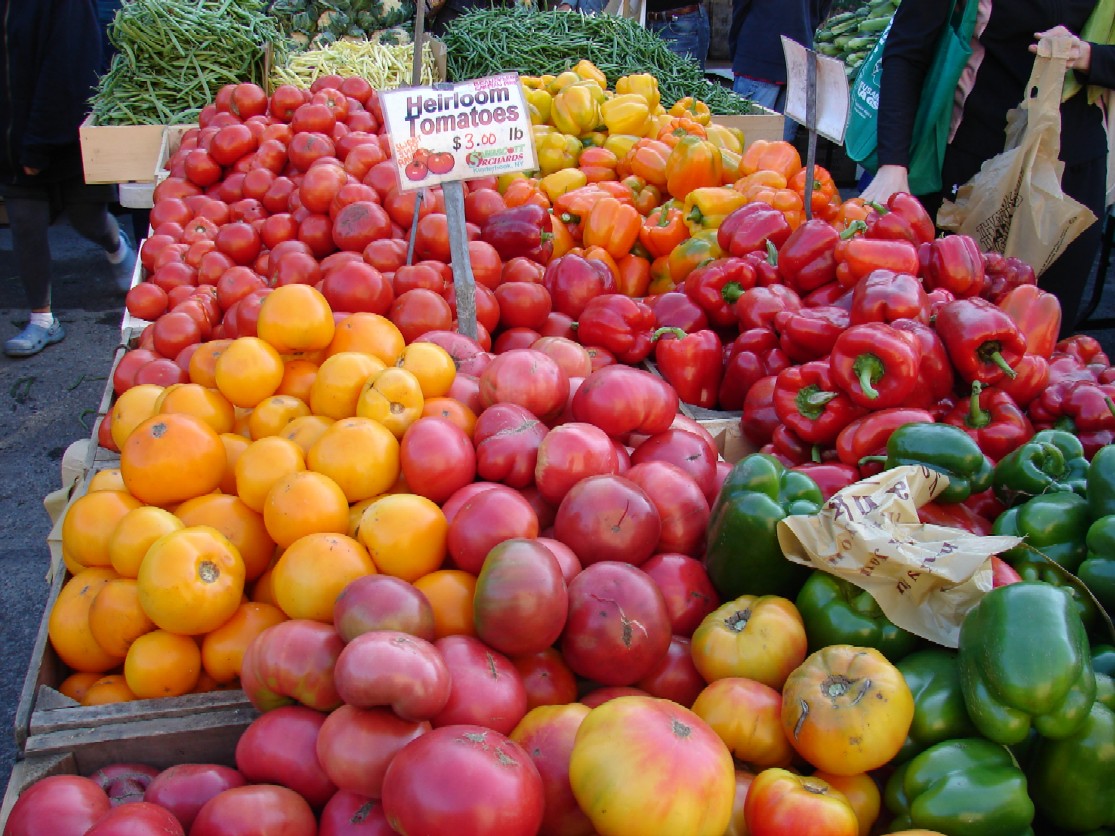
 Every Wednesday there is Testudo's Market on Campus filled with fresh fruits and vegetables available for anyone to purchase.  It is all from local farms, and all fresh every week just like a traditional farmers market.  The market is open 11am-3pm, and it is located at the Cole Fieldhouse.

The Farmers Market at Maryland provides a weekly opportunity for students, faculty, and staff to purchase healthy foods, fresh from local farms. In addition to facilitating physical wellness, a farm to table approach to eating inspires environmental consciousness, which is an aspect of social wellness.

A trial open-air market, referred to as “Testudo’s Market,” was warmly welcomed onto campus in April 2010. Since then, several Wellness Coalition members have been working to establish an enduring farmers market on our campus with the goal of introducing students to the health and sustainable benefits of buying food from local farmers.


The market is a partnership between the Wellness Coalition and the Office of Sustainability. It is financially supported by the Division of Student Affairs. The farmers market is a visible sign of the Division’s commitment to the health and wellness of Maryland students, faculty, and staff and represents a significant step forward in the ongoing effort to create a culture of wellness at UMD.


Mark your calendar and join us every Wednesday for delicious local produce and live music. Help us make The Farmers Market at Maryland a success for local farmers and a thriving tradition for our campus.


For more information on this or other campus events go to the University of Maryland website.

Thursday, July 19, 2012

Organizing Your Life, School, and Work by Color

School will be starting up again soon, and people are trying to get organized for the beginning of the year.  Using color in your organizational tools can help you be more productive and efficient at getting your work done in all aspects of your life.  

_MG_9161.jpgOrganizing your schedule, both personal and professional, is always a challenge. Tools in the digital space let you create to do lists, communicate timelines, and keep track of your scheduling in integrated ways, but sometimes you still need physical reminders to keep you on task. By consistently color coding the different roles in your personal and professional life using both digital and physical tools, managing your lifestyle at a glance becomes much simpler.

Google offers a great online calendar, which, tied to your Google account, lets you create multiple color coded calendars in a weekly, daily, or monthly view. I like to use this to track my time, both professionally and personally, and have created different calendars to reflect different roles and tasks I deal with from day to day. To be able to quickly spot what I should be doing through the week, I've selected color codes for each calendar, often choosing a color pertinent to the task. Outside of the digital space, I bring the same color coding to life by keeping a set of colorful markers and sticky notes around, matching the colors used in my online calendars for consistency.

As a freelance designer, I often work with several different clients at once, and so I like to choose a color to represent each client (often one which matches a color used in their branding). When outlining a project on bristol board as I often do, I might use a colored marker I've associated with a client for headings, or quick fills in mock up sketches, to ensure I can easily spot notes for a specific project or task amongst a pile of others. In setting up a calendar to manage tasks for a specific project, I would again choose a color I can easily associate with the client for quick reference of my schedule through the day.

Outside of a professional workflow, color coding can also be useful for managing tasks around your home. For delegating chores to your kids, or for organizing between you and your significant other, have each member of your household pick a favorite color. Use these colors to create color coded Google calendars to outline and share schedules between each other. Match those colors up with sticky notes and whiteboard markers so each member can make their mark in the real world, sharing easily recognizable color coded messages with each other in a shared space.

Color can also be helpful for managing diet or exercise. Schedule your meals and fitness regiment using a bright color in your online calendar. Leave sticky notes for yourself using a matching color on the fridge or on those cookies in the cupboard for a quick reminder (via color association) of your plan for personal well being.

Adding a splash of color to your organizational workflow helps bring an eye-catching visual component to task management, but it also helps to beautify and personalize the tools we use to organize ourselves. Maintaining consistency is key, as is choosing colors that have meaning to you in the different facets of your life. Simple associations work great, for example using green for finances or red for things that are high priority. As does picking less obvious associations — for example, you might have a favorite supermarket you like to shop at with a bright purple sign, in which case purple might work well as a color for a quick reminder to pick up a loaf of bread on the way home from work.

Remember to keep things simple; if you find a set of sticky notes that only come in a few colors, try to limit the categories used in your calendar to those colors. This will help you stick to a simple system of organization that is easy to maintain, and quick to reference using just a few bright colors to simply outline how you manage your time.

For more organizational tips check out Apartment Therapy.

Thursday, July 5, 2012

University of Maryland Folk Life Festival

The University of Maryland is having a Smithsonian Folk Life Festival.  This event is going on from now until July 8th.  Head to the National Mall to see presentations on sustainable life, robotics, and early photos of the history of the University of Maryland. 

WHAT:
The University of Maryland will be on the National Mall during the Smithsonian Institution's 46th Annual Folk Life Festival. Events include:
  • A display of early photos and other materials from the Maryland Agricultural College (later the University of Maryland) as part of the Smithsonian's celebration of the 150th Anniversary of the 1862 Morrill Land Grant Act and creation of the US Department of Agriculture and
  • The University of Maryland Extension shows how it is preparing youth for a high tech world through 4-H Robotics.
  • Associate Professor of Civil and Environmental Engineering Kaye Brubaker who is also the director of the Maryland Water Resources Research Center will be participating in an informal APLU panel on "Sustainable Solutions: Coastal Connections" on Friday July 6, 2:45-3:30 at "The Commons." She will be representing Hydrology and Water Resources at UMD and the Maryland Water Resources Research Center.

WHEN:
Wednesday, June 27 through July 1, 2012 and July 4-8. Hours are 11:00 A.M. to 5:30 P.M. Point your browser to this Smithsonian General Information website for complete details.
WHERE:
The University of Maryland will be in two locations on the National Mall. Reunion Hall will house a display by University Archives celebrating the Morrill Land Grant Act and the early days of the Maryland Agricultural College. A separate tent will house the 4H robotics display. See this map (pdf) for locations.
BACKGROUND:
Morrill Hall - named after Sen. Morrill of Vermont - is the oldest building on the University of Maryland campus.
The Morrill Land Grant Act and the Maryland Agricultural College: President Lincoln signed the bill into law in July, 1862. The Maryland Legislature voted to accept the land grant in February, 1864. MAC to Millennium (The University of Maryland A to Z) says: "In 1864, the state of Maryland had 2 senators and 5 representatives in the U. S. Congress. Thus, according to the formula, Maryland would have received 210,000 acres under the act." Maryland was the third institution to benefit from the provisions of the first Morrill Act (and the oldest building on campus (above right) is named after Sen. Morrill). The University of Maryland, College Park and University of Maryland, Eastern Shore are the two land grant universities in the state of Maryland. UMES became a land grant institution thanks to the second Morrill Act of 1890.
University Archivist Anne Turkos says, "The University of Maryland Archives is very excited to be a part of this year's Folklife Festival. This is one of the major events of the summer in Washington, DC, a huge attraction for people in the area and for visitors from across the country and around the world. It's a tremendous opportunity for us to reach out to thousands of Festival-goers on behalf of the Archives and the University of Maryland and help commemorate the lasting impact of the Morrill Land Grant Act on higher education in the United States." Also see this Newsdesk Release on the day-long celebration of the Morrill Land Grant Act sponsored by the Association of Public and Land Grant Universities.

4H RoboticsThe University of Maryland Extension Taking 4H into the 21st Century:
In an effort to prepare youth for the high-tech world, the University of Maryland Extension 4-H program has incorporated robotics into its curriculum. Come experience the variety of robotics projects that engage youth, ages five to eighteen, across the state of Maryland. Meet University of Maryland Extension faculty, volunteers, and 4-H youth currently involved in the program; and participate in hands-on, interactive robotics demonstrations.

The 46th Annual Folklife Festival is sponsored by the Smithsonian's Center for Folklife and Cultural Heritage. 

For more information see the University of Maryland website.


Thursday, June 28, 2012

Free Concert and Fireworks

University of Maryland is hosting their Fabulous Fourth event next week to celebrate Independence Day.  The event is filled with activities, concerts, and fireworks!
Fireworks at the University of Maryland Celebrates Our Nation's Birthday.


COLLEGE PARK, Md. - The University of Maryland and the City of College Park are once again breaking out the red, white and blue for a fabulous Independence Day celebration.

A free concert and fireworks spectacular are on tap for Monday, July 4 beginning at 7 p.m. at the University of Maryland in Lot 1 adjacent to Campus Drive off Adelphi Road. Once again, residents are invited to enjoy Rock and Roll favorites with The Fabulous Hubcaps.

Fireworks start at dusk - about 9 p.m. You can expect a 30 to 40 minute program. In case of rain, the fireworks show will be held on Tuesday, July 5.

Concessions open at 5 p.m. offering hamburgers, hot dogs, funnel cakes, ice cream, snow cones, soda and bottled water. Grass seating is limited, so bring your lawn chairs and blankets. Personal coolers are also allowed. Great family fun!


For more information check out the University of Maryland webpage.


Twitter Delicious Facebook Digg Stumbleupon Favorites More